Behavior That Repulses God
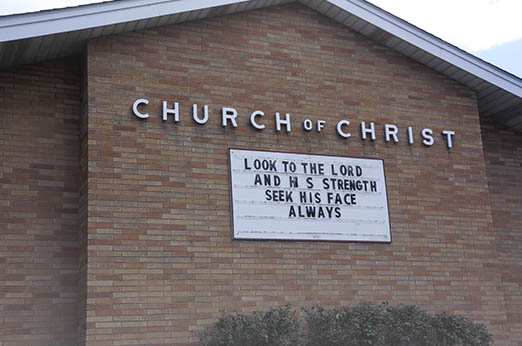
What behavior repulses God? Last Sunday Steve answered from Philippians 2:12-16, 1 Corinthians 10:6-20, and Numbers 14, 16, and 21. The answer is murmuring: grumbling, complaining, or expressing discontent, often in a quiet way, against God or the leaders He has appointed. It is not mere honesty about a hard day. It is discontent that has stopped trusting God's provision.
Steve brought the wilderness into the dinner table after worship. The brotherhood, he said, will go home and have fried deacons, fried elders, or fried preachers. The song leader butchered the songs. The Lord's table was poorly waited on. That talk is murmuring, and God hates it because it is aimed at people He has appointed. The same pattern wrecks an office and a locker room. Others join in. Morale falls. People stop giving their all. Murmuring is the enemy of teamwork.
Israel learned that at terrible cost. In Numbers 14 they refused Canaan after ten spies gave a demoralizing report; they asked why they had not died in the wilderness, and God gave them what they asked. In Numbers 16 Korah rose against Moses and Aaron, and the earth swallowed them. In Numbers 21 they complained about the road around Edom. God sent fiery serpents. Mercy came only when a bronze serpent was lifted up, and those who looked were healed.
Paul will not treat this as a small habit. "Do all things without grumbling or disputing," he writes, so that we may shine as lights in a crooked generation, holding fast the word of life. Steve said the church is the worst place to find murmuring, because nothing so empties a people of strength.
The same God who sent serpents also provided a look that heals. Jesus has been lifted up. Those outside of Christ may still come: believe, confess Him as Lord, and be baptized for the remission of sins.
See the full article
West Side CoC, Cleveland, Ohio — 2026
Moses' Bronze Serpent
John 3:5-7,13-15
Jesus Himself joined Moses’ bronze serpent to the cross. Speaking with Nicodemus, He said that as Moses lifted up the serpent in the wilderness, so must the Son of Man be lifted up, that whoever believes in Him may have eternal life. The comparison is not a later homiletic flourish. It is the Lord’s own word.
The story sits in Numbers 21, in Israel’s last wilderness year. Impatient on the road around Edom, the people spoke against God and Moses and loathed the manna God gave them. The Lord sent fiery serpents. Many died. They confessed and asked Moses to pray. God did not answer with a sacrifice already written in the Law. He told Moses to make a fiery serpent, set it on a pole, and promise life to everyone who looked. One pole stood before more than a million people. Life was joined to the look God commanded. Faith was not a substitute for that look. Faith did the looking.
John 3 will not let the image float free of new birth. Unless one is born of water and the Spirit, he cannot enter the kingdom. “Whoever believes” is not “faith alone.” The only time Scripture joins those words is James 2:24, which denies justification by faith alone. Believing is necessary. Entering requires being born again.
Why a serpent, not a lamb? The pole answers the cross. Paul shows sin and the legal record nailed there (Colossians 2:11-15). Where the Law is put to death, transgression loses its claim (Romans 4:15; 5:13; 8:1-4; Galatians 3:13-14). The same image reaches further. Satan is that ancient serpent (Revelation 12; 20). Genesis 3:15 promised a crushed head and a bruised heel. Psalm 91:13, the verse Satan omitted when he tempted Jesus, says the Lord will trample the lion and the serpent. That stomp is the cross. Hebrews 2:14-15 says that through death He destroys the devil.
Romans 6 then shows the way in: baptized into His death, crucified with Him, raised with Him. That is birth of water and Spirit. Look to the One who was lifted up, and live.
See the full article
West Side CoC, Cleveland, Ohio — 2026
Just Fish
John 21:1–14 and Luke 5:1–11
The risen Jesus stands on the shore of the Sea of Tiberias. Seven disciples have fished all night and caught nothing. At His word they cast on the right side of the boat and haul in 153 large fish. The net does not tear. A charcoal fire, fish, and bread are already waiting. “Come and have breakfast.” This is the third post-resurrection appearance to the disciples.
Scripture does not waste details. The number 153 is named because it matters. Early Christians already used the Greek word for fish—ichthys—as an acrostic: Jesus Christ, God’s Son, Savior. The simple outline of a fish became a compact creed, which is why the “Jesus fish” still appears today. It is confession, not decoration.
Luke 5 records an earlier, similar scene at the beginning of the ministry. After a fruitless night Jesus tells Simon to put out into the deep. The catch is so great the nets begin to break and both boats start to sink. Peter falls at Jesus’ knees as a sinful man. Jesus answers, “From now on you will catch men.” They leave everything and follow Him.
The two events share the same men, the same lake, a wasted night, and sudden abundance at Jesus’ word. The differences are the point. Luke 5 is the call before the cross; the number is only “a great many” and the nets break. John 21 is after the resurrection; the number is exact and the net holds. Fish often stand for people. The breaking net pictures an unfinished proclamation. The intact net and counted catch picture the completed gospel: Jesus Christ, Son of God, Savior. Those who belong to Him are known.
Commentators have noted that 153 was once thought to be the number of known fish species, so the catch represents every kind of person the gospel can reach. It is also a triangular number (the sum of 1 through 17). Whatever extra layers one accepts, the text insists on a real, limited, countable catch the net could hold.
Matthew 25 supplies the last image: the Son of Man separates the nations as a shepherd divides sheep from goats—sheep on the right. The net you want is the one cast on the right side of the boat. That net does not tear. Breakfast is already prepared. Come.
See the full article
West Side CoC, Cleveland, Ohio — 2026
The Christian’s Inheritance
A testament is a will. The New Testament, then, is not only Scripture; it is the instrument by which God names heirs. The Spirit bears witness that we are children of God, and if children, then heirs—heirs of God and joint heirs with Christ (Romans 8:16–17). A will takes effect when the testator dies. This will is in force because Christ died.
Jesus told of vinedressers who recognized the owner’s son as the heir, killed him, and claimed the inheritance. The owner would come, destroy them, and give the vineyard to others. The chief priests and Pharisees perceived that He spoke of them. The kingdom would be taken from those who rejected the Son and given to a people who would bear its fruit.
Another man asked Jesus to divide a family inheritance. Jesus refused to arbitrate and warned against covetousness: life does not consist in the abundance of possessions. Houses flood. Property burns. Earthly estates fade.
Christ offers another inheritance, received only by those who become His children. Belief in the Son, repentance, and baptism for the remission of sins bring a person into the church He purchased with His own blood. The Lord adds the saved to that church. Paul commended elders to God and to the word of His grace, which is able to build them up and give them an inheritance among the sanctified. In Christ believers have obtained an inheritance and are sealed with the Spirit as its guarantee until the redemption of the purchased possession.
The will also contains stipulations. No fornicator, unclean person, or covetous idolater has an inheritance in the kingdom of God. Disobedience does not erase sonship, but a child of disobedience can be disinherited. Empty words that say otherwise deceive.
What remains for the faithful is an inheritance incorruptible, undefiled, and unfading, reserved in heaven. Hold fast to the word. Continue. That inheritance does not fade away.
See the full article
West Side CoC, Cleveland, Ohio — 2026
Grow in Grace: Peter’s Recipe for Maturity
A short summary of the longer article “Peter’s Recipe for Christian Growth,” drawn from Jim’s morning and evening sermons on August 30, 2026.
Peter wrote his second letter as a flawed man whom God had remade. Jim calls him a favorite biblical character for that reason: there is a little of Peter in all of us. He boasted in the upper room, denied Jesus with curses in the courtyard, and wept bitterly when the rooster crowed and the Lord looked at him. Jesus had already prayed that his faith would not fail. Jim holds that a private appearance restored Peter; the three questions on the Galilee shore were a public reckoning and a test of humility—agape versus phileo—before the charge to feed lambs and sheep.
That charge shaped the letter. Peter was apostle and elder. He fed milk to the young and meat to the mature, and he refused spiritual autopilot. As martyrdom neared—traditionally around 67 AD, under the shadow of Nero after the fire of 64—he left the church a method, not a mood.
God’s divine power has already given everything needed for life and godliness through the knowledge of Christ. Peter’s word is epignosis: knowledge possessed and practiced, not merely collected. Grace and peace multiply as that knowledge grows. To faith add goodness, knowledge, self-control, perseverance, godliness, brotherly kindness, and love. Possessed in increasing measure, these keep a believer from being useless in the knowledge of Christ.
Growth is an upward spiral: study, practice, likeness; then more grace, more peace, more study. Trials will come. Walk in the light; the blood of Jesus cleanses and lifts guilt. Beware pride—knowledge puffs up; love builds up—and beware false teachers. Peter’s last word is still the church’s work: grow in the grace and knowledge of our Lord and Savior Jesus Christ.
For the full account of Peter’s fall and restoration, bosko and poimaino, the elementary teachings of Hebrews 6, and the complete recipe in 2 Peter 1–3, see the longer article, “Peter’s Recipe for Christian Growth.”
See the full article
West Side CoC, Cleveland, Ohio — 2026
For His Name's Sake
There is a phrase that opens the heart of God and touches something sacred in His character: “for His name’s sake.” When we learn to think and live with that motive, we please God and advance His reputation.
Psalm 23 declares, “He leads me in the paths of righteousness for His name’s sake.” God shepherds His people so that we will glorify Him, think well of Him, and credit to Him what is righteous. His providence and protection are deliberate acts designed to form a grateful estimate of His character in us.
This concern did not begin with the psalm. When God created the world, He assumed lasting responsibility for it. Psalm 104 shows that He still sustains everything He made. He waters the earth, causes grass to grow for cattle and plants for people, and supplies bread, water, and air. All creatures look to Him for food at the proper time. If He withdrew His hand, we would perish. He continues this care for His name’s sake, so that we will ascribe glory to Him.
The same motive appears in Israel’s history. When the people rebelled in the wilderness and God threatened to destroy them, Moses appealed to the honor of God’s name. The nations watching would ridicule Him if He failed to bring His people into the land. God relented because of that appeal.
Jesus Himself lived by this principle. Facing the cross in John 12, He prayed, “Father, glorify Your name.” A voice from heaven answered, “I have glorified it and will glorify it again.” The cross was for the Father’s name’s sake—so the world would know God’s love in giving His Son.
Paul learned the same lesson. In Philippians 4 he wrote that he could do all things through Christ who strengthened him, because God meets every need according to His riches in glory. God strengthens us so that He may show Himself strong and His name may be glorified.
Every trial and every provision is for His name’s sake. He has not forgotten us. He offers the promise of heaven through Christ. If you have not yet responded, name Jesus as Lord, be baptized for the remission of sins, and walk in newness of life—so that His name is glorified in you.
See the full article
West Side CoC, Cleveland, Ohio — 2026
The Power of Prayer
Not the Least We Can Do, but the Most
When someone faces serious illness or a situation that seems beyond human help, we often hear the words, “Well, all we can do now is pray.” The phrase sounds humble, yet it quietly treats prayer as a last resort—the action taken only after every practical option has failed. Scripture never presents prayer that way. The Bible presents it as the most we can do.
Jesus taught, “Ask, and it will be given to you; seek, and you will find; knock, and it will be opened to you” (Matthew 7:7). James declares, “The prayer of a righteous person has great power as it is working” (James 5:16). God is completely sovereign—“Our God is in the heavens; He does all that He pleases” (Psalm 115:3)—yet in His wisdom He has chosen to involve the prayers of His people in the outworking of His purposes. Prayer does not inform God of anything He does not already know, nor does it twist His arm. It is the privilege He has given us to participate in what He is doing.
Jesus Himself modeled this privilege, rising early to pray, withdrawing to lonely places, and pouring out His heart in Gethsemane. James points to Elijah, “a man with a nature like ours,” whose fervent prayer stopped the rain for three and a half years and then brought it back again. Ordinary believers, praying according to God’s will, can see God accomplish extraordinary things.
Answers may come quickly or slowly. Sometimes the answer is “no” or “not yet.” The prayer is never wasted. When the church prayed earnestly for Peter in prison, God sent an angel and set him free. When Paul and Silas prayed and sang at midnight, the prison doors opened. Persistence matters. Jesus told the parable of the persistent widow so that we would “always pray and not lose heart.” Our High Priest “always lives to make intercession” for us (Hebrews 7:25). How then can we grow tired of praying for one another?
Practical help—meals, visits, assistance—should never be neglected. Yet prayer is not in competition with service; it is the foundation under it and the power behind it. The greatest thing we can do for anyone is to bring them before the throne of grace.
Prayer is not the leftover of human effort. It is the primary way God has given His people to care for one another and to seek His help. Keep praying. The God who hears is still on the throne.
See the full article
West Side CoC, Cleveland, Ohio — 2026
The Battle of the Seeds Begins
The Seed of the Serpent vs The Seed of the Woman
Genesis 3:15 promised that the seed of the woman would crush the serpent’s head. That conflict is already raging in Genesis 4. John writes that Cain was of the evil one and murdered his brother because his own deeds were evil and Abel’s were righteous. When the Lord regarded Abel’s offering and not Cain’s, Cain burned with anger. God warned him: “Sin is crouching at the door. Its desire is contrary to you, but you must rule over it.” Cain refused. He rose up against Abel and killed him. The first recorded human death was fratricide. Abel’s blood cried from the ground. God intensified the curse on Cain, sentencing him to be a fugitive and wanderer, yet still showed mercy by placing a protective mark on him.
Cain went away from the presence of the Lord. His line produced cities, music, metalwork, and tents—real cultural advances—yet ended in Lamech, who took two wives and boasted of seventy-sevenfold vengeance, twisting God’s protection into license. The seventh generation of Cain was violent; the seventh of Seth was Enoch, who walked with God.
God did not abandon the promise. Eve named another son Seth, saying God had appointed another offspring in place of Abel. With Enosh, Abel's son, people began to call upon the name of the Lord. Scripture sets the two lines side by side: one builds its own security and multiplies violence; the other receives God’s appointment and turns to Him.
The true appointed Seed is Christ. Abel’s blood cried for justice; His blood speaks a better word—mercy and reconciliation. Two paths remain. Will we walk in the way of Cain, or will we call upon the name of the Lord?
See the full article
West Side CoC, Cleveland, Ohio — 2026
Sayings of the Mouth Matter
Words leave the mouth and rarely leave a life unchanged. In a recent sermon, Mike Mathis pressed this truth home from James 3 and Proverbs 10.
James compares the tongue to a small bit that turns a horse and a tiny rudder that steers a large ship. It is also a fire: “See how great a forest a little fire kindles!” A careless spark can destroy hundreds of homes. The tongue is a world of iniquity, set on fire by hell, restless and full of deadly poison. With it we bless our Lord and Father, and with it we curse people made in God’s likeness. These things ought not to be so.
Proverbs 10 draws the contrast sharply. “The mouth of the righteous is a well of life.” “The tongue of the righteous is choice silver.” “The lips of the righteous feed many.” Truthful, pure speech refreshes and strengthens others. By contrast, “violence covers the mouth of the wicked,” and “the name of the wicked will rot.” Speech reveals the heart.
Mike rejected the old saying that “sticks and stones may break my bones, but words will never hurt me.” Scripture and experience prove otherwise. Words wound deeply—or they heal and build up.
He closed with Matthew 7:21-27. Not everyone who says “Lord, Lord” will enter the kingdom, but only the one who does the Father’s will. The wise man hears Jesus’ sayings and acts on them, building on the rock. The foolish man hears but does not obey, and the storm exposes the sand.
Jesus lived without a single sinful word and died to cleanse every sin of the tongue. Those who come to Him in faith, repentance, confession, and baptism receive new life that is meant to reshape the mouth as well as the heart. Guard your speech. Speak what builds up. The sayings of the mouth matter—now and forever.
See the full article
West Side CoC, Cleveland, Ohio — 2026
Balaam Son of Beor
Part 2
John read Revelation 2:14, in which Christ rebukes those who hold to the teaching of Balaam—the man who taught Balak to entice Israel into idolatry and sexual immorality. Jim continued his study of Balaam by recalling how the angel of the Lord had protected Israel from Balak’s hired curse. Balaam, a Mesopotamian baru trained in the black arts and known as a “devourer of people,” was driven by greed for the wages of wickedness.
Despite God’s clear restriction, Balaam eagerly set out after Balak’s second delegation. The angel of the Lord stood in his path with drawn sword. Only the donkey saw the danger and turned aside, receiving three beatings until the Lord opened its mouth to rebuke the prophet’s madness—an event later cited by Peter (2 Peter 2:15-16). Balaam finally saw the angel, humbled himself, and was allowed to proceed only if he spoke the Lord’s words alone.
Three times Balak sought a curse; three times God filled Balaam’s mouth with blessing. On the third occasion the Spirit of God came upon him, and he prophesied Israel’s future victory. Yet Balaam was never changed. Before departing he whispered counsel to Balak: corrupt Israel from within by inviting them to Moabite sacrifices and immorality. Israel fell at Baal of Peor; twenty-four thousand died in the plague. Balaam himself was later killed by the sword when Israel judged Midian (Numbers 31).
Christ identifies the same teaching in the church at Pergamum. The deeper lesson is personal. Many, like Balaam, may avoid certain sins merely from fear of punishment while the heart still loves the wages of wickedness. God desires willing obedience born of love and gratitude for the cross. Perfect love casts out fear (1 John 4:18). The mature Christian keeps Christ’s commands because he loves Him (John 14:21). Jesus had Israel’s back then; He has ours now—provided we walk in genuine obedience.
See the full article
West Side CoC, Cleveland, Ohio — 2026
Overcoming the Neighbor From Hell
What To Do When Sin Lies at the Door
On July 19, 2026, Tom and John delivered complementary sermons at West Side Church of Christ that together provide a timely, practical guide for facing temptation. Tom’s morning message, “The Neighbor From Hell,” portrayed Satan as a persistent tempter who repeatedly dangles small, attractive offers—much like a troublesome neighbor offering tasty morsels that lead to ruin. Using Genesis 4, Tom showed how sin crouches at the door, desiring to master us, yet God calls us to rule over it.
John’s evening sermon, “What To Do?,” built directly on this foundation by examining God’s words to Cain in Genesis 4:6-7. He stressed that doing well requires both inward and outward obedience. Drawing from Noah Webster’s 1828 dictionary, John distinguished ethics (what should be according to God’s unchanging standard) from morality (what we think should be). To live rightly, believers must conform their thinking to God’s word rather than cultural opinions.
Correct thinking, John explained, acts as a steering wheel for life. Proverbs 23:7 reminds us, “As he thinks in his heart, so is he.” Ephesians 5 and 1 Corinthians 1 reinforce the need for wise, gospel-centered minds that reject the evil neighbor’s illusions. Yet knowing the right path is only half the battle. Carrying it out demands following the scriptural pattern (Philippians 3:17), surrounding ourselves with faithful believers who exemplify godly character (1 Timothy 4:12), and relying on Christ amid the internal struggle described in Romans 7.
Paul’s honest confession of the war within finds its answer in Jesus: “Thanks be to God through Jesus Christ our Lord!” After baptism into His death and resurrection, believers receive a clean slate and the power to overcome.
Together, these sermons urge us to recognize the neighbor’s (Satan's) tactics, renew our minds according to God’s ethics, and actively rule over sin in community. Let us pray for strength to think and live according to God’s perfect will, not our own, bringing glory to Christ.
See the full article
West Side CoC, Cleveland, Ohio — 2026
Paul's Letter to the Philippians 1&2
Joy, Contentment, and Trust in God
In his two-part sermon series on July 12, 2026, Steve explored Paul’s letter to the Philippians, a joyful epistle written from prison to first-generation Christians. These believers lacked the full Scriptures and needed guidance on Christian living. Paul wrote to instruct, encourage, and correct them, just as he did for other churches.
Central to the letter is the call to work out our salvation with fear and trembling, knowing that “it is God who works in you to will and to act according to his good purpose” (Philippians 2:12-13). God’s divine intervention, providence, and preservation are evident throughout. Steve shared his own testimony of how God opened doors for preaching school in 1977—meeting every stipulation his wife set—demonstrating God’s faithful provision.
Paul urges humility and unity. Believers must do everything “without grumbling or arguing” so they may shine like stars in a crooked generation (2:14-15). He warns against false teachers and shares his own impressive background, only to count it all as loss for the surpassing worth of knowing Christ (3:7-8). Pressing on toward the resurrection, Paul forgets what lies behind and strains ahead.
In chapter 4, Paul rejoices over the Philippians’ renewed support. He has learned the secret of contentment in every situation—whether in plenty or in need: “I can do all things through him who gives me strength” (4:13). Steve illustrated this with his Coca-Cola days, where choosing radical honesty led to unexpected blessings.
Believers are commanded not to be anxious. Just as God provided for creation and cares for birds and flowers, He will meet our needs when we seek first His kingdom (Matthew 6:25-34). God replenishes generous givers so they can continue kingdom work.
The message is clear: rejoice always, trust God’s provision, live humbly, and remain content. Whether facing hardship or abundance, Christ strengthens us. This letter continues to equip the church today to live faithfully for God’s glory.
See the full article
Toledo Road CoC, Cleveland, Ohio — 2026
"You Will Be Free Indeed" 1 & 2
Reconciliation & Sanctification
On July 5, 2026, AM & PM, we explored the theme of freedom in Christ through the title "You Will Be Free Indeed." Drawing from John 8:31-36 and Romans 3–8, the sermons revealed two interconnected aspects of liberty: freedom through reconciliation at salvation and progressive freedom through sanctification in daily life. The Bible’s teaching on freedom brings fresh insight to familiar passages, producing faith and calling us to stand firm.
Freedom Through Reconciliation
The first aspect addresses our standing before God. Through hearing, believing, repenting, confessing, and baptism—the typology of union with Christ’s death, burial, and resurrection—we are freed from sin’s slavery. We receive the gift of righteousness and justification (Romans 3-6). Jesus declares in John 8:36 that the Son sets us free indeed. Romans 6 shows our old self crucified so we are no longer enslaved to sin. We become slaves of righteousness.
This brings peace with God, the Holy Spirit, and no condemnation (Romans 5:1; 8:1-2). Where there is no law, there is no transgression (Romans 4:15; 5:13). Dying with Christ frees us from the law’s power (Romans 6:5-8; 7:1,4-6). We are justified by faith through baptism (Romans 6:5-8, 17-18), not law-keeping (Romans 5:1). Galatians 5:1 urges: "For freedom Christ has set us free; stand firm."
Continuing Freedom Through Sanctification
The second aspect is ongoing growth. Having been freed from sin and enslaved to God, we reap sanctification leading to eternal life (Romans 6:22). We walk in the light, confess sin, and receive continual cleansing (1 John 1). Freedom is for loving service, not license to sin (Galatians 5:13). Walking by the Spirit produces fruit of the Spirit and transforms us into Christ’s image (Galatians 5:16-25; 2 Corinthians 3:17-18).
Conclusion
Freedom comes from Christ’s cross and resurrection and the indwelling Spirit. We are freed from sin, condemnation, and death for loving service, holiness, and future glory. With responsibility, we stand firm—neither returning to legalism nor indulging the flesh. If the Son has set us free. You are free indeed. May we live as those reconciled and being sanctified by the same gracious Spirit.
See the full article
West Side CoC, Cleveland, Ohio — 2026
Being Sound, Parts 1 & 2
Pursuing Wholeness in Christ
In his two-part lesson “Being Sound,” Mike Mathis calls the church to pursue a complete, healthy, and whole faith rooted in God’s Word rather than the shifting wisdom of the world.
Scripture reading from 1 Corinthians 1 sets the foundation: the message of the cross appears foolish to the perishing, but it is the power and wisdom of God. Paul contrasts the world’s “wisdom” — which denies its Creator — with the apparent “foolishness” of preaching Christ crucified. Jews demand signs and Greeks seek philosophy, yet God saves believers through the preached gospel. As at Jericho, where marching and shouting toppled walls, God’s ways often seem weak or foolish by human standards, yet they prove wiser and stronger than man’s best efforts.
God stores up sound wisdom for the upright (Proverbs 2:7; 3:21). This is not mere knowledge but the skillful application of truth — discretion that leads to fearing the Lord and hating evil. A sound heart brings life to the body, while envy rots the bones (Proverbs 14:30). The psalmist prayed, “Let my heart be sound in Your statutes, that I may not be ashamed” (Psalm 119:80). Internally, this requires a sound mind — free from doubt and fear. James 1:5–8 urges us to ask God for wisdom in faith, without wavering, while 2 Timothy 1:7 reminds us God gives power, love, and a sound mind.
Outwardly, soundness appears in sound doctrine, sound faith, and sound speech (Titus 1–2). Elders must hold fast to the faithful word so they can exhort and convict with sound teaching. Older men are to be “sound in faith, in love, and in patience,” while all believers display integrity and speech that cannot be rightly condemned. Mike warned against nitpicking, worldly criticism, and man-made doctrines, contrasting them with unwavering adherence to apostolic truth — especially on salvation, baptism, and worship.
To be sound means rejecting envy, doubt, and human traditions while embracing God’s complete revelation. It means believing Christ is the Son of God, repenting, confessing Him, and being baptized for the remission of sins, then remaining faithful. Only then do we stand on solid ground, glorying in the Lord rather than ourselves.
May we pursue soundness in wisdom, heart, mind, doctrine, faith, and speech — healthy and complete in Christ.
See the full article
West Side CoC, Cleveland, Ohio — 2026
Worship in Spirit and in Truth:
Sunday and Everyday
True worship lies at the heart of the Christian life. In his June 21 message, Tom reminded us that God seeks worshipers who honor Him both on the Lord’s Day and every day of the week.
The sermon opened with powerful readings. Mike shared John 4:23-24: true worshipers will worship the Father “in spirit and in truth,” for God is Spirit and seeks such people. Roger read Romans 12:1-2, urging believers to present their bodies as living sacrifices—this is our spiritual worship—and to be transformed by renewing our minds.
Tom acknowledged his own past confusion. Sunday services with singing, prayer, preaching, and the Lord’s Supper felt like real worship, while the rest of the week seemed like ordinary life. A workplace conversation challenged him to think more deeply about the balance between corporate assembly and daily devotion. He realized both are essential and must follow God’s word.
Daily Worship as a Living Sacrifice—Romans 12:1 calls us to ongoing surrender. Everything we do—eating, working, gardening, woodworking—can glorify God (1 Corinthians 10:31; Colossians 3:23-24). Whether on long shifts or in quiet moments meditating on Scripture, a thankful heart, constant prayer, and rejoicing turn ordinary days into worship (1 Thessalonians 5:16-18). Deuteronomy 6 and Psalm 1 show this was always God’s design: His word woven into every part of life.
The Lord’s Day Assembly—Scripture establishes the first day of the week as special (Acts 20:7; 1 Corinthians 16:2; Revelation 1:10). Hebrews 10:24-25 commands us not to neglect gathering. In corporate worship we find encouragement, teaching, the Lord’s Supper, unified praise, fellowship, and renewal for the week ahead. Phone services help, but nothing replaces being present with the saints.
Sunday equips us for daily sacrifice, while daily faithfulness makes Sunday authentic rather than ritual. Jesus warned against vain worship that honors with lips but not the heart (Matthew 15:8-9). We must worship God’s way—following the New Testament pattern of teaching, singing, prayer, the Supper, and giving—rather than man-made traditions.
Daily devotion and faithful assembly go hand in hand. Let us commit to offering our whole lives to God every day and gathering as commanded. If you have neglected either, today is the day to respond.
See the full article
West Side CoC, Cleveland, Ohio — 2026
A Tale of Two Kingdoms, Parts 1 & 2
Jim's Two-part Sermon Condensed
Scripture reveals two invisible kingdoms that divide all humanity. The kingdom of God, the oldest and eternal, is ruled by the invisible Father, with the Son as humanity’s divine interface. The other is the Dominion of Darkness, ruled by Satan. Every person belongs to one or the other, determined not by geography but by spiritual allegiance.
In the beginning, God created humanity in His image and granted dominion over creation (Genesis 1:26-28). Adam and Eve, however, surrendered this authority in the Fall. Deceived by the serpent, they chose rebellion over God’s command, eating the forbidden fruit and transferring power to Satan (Genesis 3). Their eyes were opened to nakedness and guilt; they hid from God. This act birthed Satan’s kingdom. All who sin and reject God’s word become its citizens. Corruption spread rapidly—from Cain to the flood—yet God immediately provided covering through animal sacrifices, pointing forward to a perfect remedy.
For 4,000 years, sacrifices atoned temporarily. Then Jesus, the sinless Son of God, became the true Passover Lamb. Tempted as we are yet without sin, He died on Calvary, paying the penalty we deserved. Through faith in Christ and obedience, sinners are rescued “from the dominion of darkness” and transferred into “the kingdom of His beloved Son,” receiving redemption and forgiveness (Colossians 1:13-14). Children and those without mental capacity to discern right from wrong belong to God’s kingdom as innocents.
Believers must remain vigilant. Satan schemes to reclaim us through deception and rebellion. Paul urges putting on the full armor of God—truth, righteousness, faith, salvation, the Word, and prayer—to stand against spiritual forces of evil (Ephesians 6:10-18). We fight not alone but with the Spirit, Scripture, and the church family.
The tale ends in triumph. Christ will return, destroy all opposing dominion including death, and hand the kingdom to the Father (1 Corinthians 15:24-26). Believers will receive eternal bodies and live forever with the King.
Examine your allegiance today. Renounce darkness, embrace Christ’s light, and stand firm until His return. God’s gracious solution is available to all who humbly accept it.
See the full article
West Side CoC, Cleveland, Ohio — 2026
Do I Have God’s Approval?
Steve’s Sermon Summary
Steve delivered a powerful and personal sermon titled “Do I Have God’s Approval?” Drawing from his ongoing series in Romans, Steve wrestled openly with the lesson, seeking to deliver it as the Lord desired. His central question challenged every listener: Do you know whether you have God’s approval? The comfort of knowing you do, he emphasized, is profound.
Kevin read the Beatitudes from Matthew 5:3-10, highlighting kingdom blessings for the poor in spirit, meek, merciful, pure in heart, and those persecuted for righteousness. Roger followed with Acts 10:34-36, where Peter declares God shows no partiality—those who fear Him and do right are welcome in every nation through Jesus Christ, Lord of all.
Steve turned to Hebrews 11:5-6, noting that without faith it is impossible to please God. One must believe God exists and rewards those who diligently seek Him. Enoch pleased God through such faith. The sermon explored righteousness: not mere rule-keeping, but a life in harmony with God’s will, acceptable to Him.
From Romans 2, Steve showed that God judges secrets through Christ, justifying the obedient. Romans 1 warns of God’s wrath against those who suppress truth, exchange God’s glory for idols, and walk contrary to His will on purpose—unrighteousness. In contrast, the righteous in Psalms 33 and 34 praise God, cry out to Him, and receive His deliverance.
The heart of the message centered on Abraham. Called from idolatrous Ur, Abraham received great promises yet struggled to fully trust. In Genesis 15, when he believed God’s promise of a son despite old age, “it was credited to him as righteousness” (Genesis 15:6). God justified him through faith.
Steve applied this directly: We are justified when we believe God’s offer of reconciliation through Christ’s cross. Baptism for the remission of sins marks our response, bringing newness of life dedicated to God’s will, as Psalm 119 beautifully expresses. At baptism we promise to walk in obedience regarding marriage, speech, trust, and all of life.
Steve closed with an invitation to respond and be counted among God’s approved—righteous in His eyes. The congregation stood to sing in response.
This sermon calls us to examine our faith: Are we truly seeking and trusting God? His approval comes not by perfection but by believing His promises fulfilled in Jesus and living accordingly. May we all walk as the righteous, comforted by His approval.
See the full article
West Side CoC, Cleveland, Ohio — 2026
Why Genesis Still Matters - Genesis 1-3
A Call to Stand on Scripture
In his sermon titled In the Beginning: Why Genesis Still Matters, Scott delivered a powerful defense of the opening chapters of the Bible. Addressing the congregation after scripture readings from Genesis 1:1 and 2 Peter 3:3-7, he warned that how we view Genesis directly impacts the strength of our entire faith.
Scott highlighted a growing crisis: studies show 60-80% of Christian young people leave the faith when entering college. Research by George Barna reveals that two-thirds turn away during these years, with regular Bible class attendees often becoming more skeptical of Scripture’s accuracy, more accepting of evolution, and more likely to reject a young earth. This pattern reveals a dangerous connection — undermining Genesis creates a slippery slope that weakens belief in the cross, resurrection, and future hope.
The sermon contrasted today’s dominant secular worldview with the biblical one. Modern culture, influenced by materialism and postmodernism, relies on uniformitarianism, deep time, natural processes only, and sees death as a natural part of evolution. In opposition, Genesis presents God’s eyewitness testimony: creation in six literal 24-hour days, with a specific order (plants before sun, birds before land animals, humans as the climax), and death entering through Adam’s sin.
Using a car accident analogy, Scott illustrated the difference between assumptive historical science and reliable eyewitness testimony. Genesis is the trustworthy account from the only One present “in the beginning.”
Scott urged four responses: believe God’s Word plainly from verse one, teach the next generation the full truth of Scripture, live under God’s total authority, and stand unashamedly despite cultural mockery. The same inspired text that reveals the cross reveals creation — they stand or fall together.
In 2026, amid skepticism and competing worldviews, Genesis remains foundational. Accepting it as true transforms how we see ourselves as image-bearers of God and strengthens our hope in redemption.
See the full article
West Side CoC, Cleveland, Ohio — 2026
Who Are These People?
A Sermon on Biblical Reliability
On May 24, 2026, preacher John delivered an insightful evening sermon titled “Who Are These People?” based on Luke 3:1-4. The passage sets the ministry of John the Baptist in a precise historical context: the fifteenth year of Tiberius Caesar, during the governorship of Pontius Pilate, the rule of Herod Antipas as tetrarch of Galilee, and the high priesthood of Annas and Caiaphas.
John began by reading the text, noting its eleven proper names, including the Jordan River. As an accountant with over 25 years of Bible study, he used the passage to address a skeptic’s challenge: “How can one person write all that, and why should we live by it?” He clarified that the Bible was written by many authors over centuries, not a single individual.
The sermon emphasized Scripture’s historical reliability. Far from myth, Luke 3 names real people and events verifiable through extra-biblical sources. John displayed a Roman imperial family tree highlighting Tiberius (emperor A.D. 14–37) and referenced Pontius Pilate’s governorship (A.D. 26–36). He detailed Herod Antipas, son of Herod the Great, who ruled Galilee and famously beheaded John the Baptist after a rash oath at his birthday feast—an account corroborated by historian Flavius Josephus in Antiquities of the Jews.
John also covered Annas and Caiaphas’ roles in Jesus’ trial, illustrating the interconnected web of political and religious power in first-century Judea. Drawing from Proverbs 18:17 and journalist Lee Strobel’s investigative standards, John encouraged cross-examination of biblical claims. He argued that archaeology, manuscript evidence, prophecy, and historical records all support Scripture’s credibility.
Rather than circular reasoning, faith rests on cumulative evidence. These “people” were real—emperors, governors, tetrarchs, and prophets—whose lives intersected with God’s unfolding plan. John concluded by praising God for His trustworthy Word.
This sermon invites believers and skeptics alike to examine the Bible’s historical foundation, discovering a faith grounded in verifiable truth.
See the full article
West Side CoC, Cleveland, Ohio — 2026
The Grave Clothes of Jesus, Part 1
Proof of the Resurrection
In his Sunday morning sermon on May 17, 2026, the Preacher, Mike presented Part 1 of “The Graveclothes of Jesus,” drawing from the Gospel of John to show how the linen wrappings left in the empty tomb provide powerful evidence that Christ truly rose from the dead.
The service opened with two key Scripture readings. John read John 11:43-44, where Lazarus emerged from the tomb bound hand and foot with graveclothes, his face wrapped in a separate cloth. Roger followed with John 19:38-40, describing how Joseph of Arimathea and Nicodemus prepared Jesus’ body by wrapping it in linen strips with spices, according to Jewish custom.
Mike noted that Scripture mentions Jesus’ graveclothes in only two places—Luke 24:12 and especially John 20. He asked why these details were recorded. His answer: to silence false claims that undermine the resurrection. Addressing a popular modern theory, Mike examined the Shroud of Turin, a 14-foot-5-inch by 3-foot-7-inch cloth bearing a facial image some claim is Jesus’. He demonstrated a clear contradiction. Jewish burial practice used multiple linen strips to bind the body and a separate face cloth—not a single large sheet.
Reading John 20 from the Tree of Life Version, Mike highlighted the scene: Peter and John found the linen strips lying in the tomb and the face cloth rolled up by itself. The clothes were there, but the body was gone. This orderly scene, Mike declared, proves Jesus did not have His body stolen or simply revived—He resurrected.
Mike encouraged the congregation to stand on Scripture rather than sensational claims. The empty graveclothes offer believers hope: just as Christ rose, those who trust Him will also rise to victory, whether at His return or in the resurrection.
Mike concluded by inviting everyone to the evening service for Part 2. This message reminds us that the simple linen cloths left behind proclaim a mighty truth—Christ is risen indeed.
See the full article
West Side CoC, Cleveland, Ohio — 2026
Paul’s Exhortation to the Corinthian Church, Part 2
Five Commands for Christian Living
In the evening service, Jim concluded his message on Paul’s fatherly care for the Corinthian church. After affirming, admonishing, and correcting his spiritual children, Paul ended his first letter with a powerful exhortation in 1 Corinthians 16:13-14: “Be on your guard, stand firm in the faith, act like men, be strong. Let all that you do be done in love.”
Jim unpacked these five commands. First, be on your guard (gregoreo in Greek) calls for constant vigilance—alert at church, home, work, and in every situation. Believers must watch against division, immorality, false teaching, and especially the devil who prowls like a roaring lion (1 Peter 5:8). Jesus used the same word urging readiness for His sudden return.
Second, stand firm in the faith. “The faith” means the gospel itself. Christians must hold unmovably to God’s Word, recognizing Jesus’ voice through Scripture and rejecting anything contrary. This includes tireless service, as Paul wrote in 1 Corinthians 15:58: “Be steadfast, immovable, always abounding in the work of the Lord, knowing that your labor is not in vain.”
Third, act like men—be courageous. Growing knowledge of God’s Word strengthens faith and boldness. Jesus exemplified this by setting His face like flint toward the cross, trusting the Father completely.
Fourth, be strong—not in ourselves, but “in the Lord and in His mighty power” (Ephesians 6:10). We are to put on God’s spiritual armor for the battle.
Finally, do everything in love. Agape love, detailed beautifully in 1 Corinthians 13, is patient, kind, not envious, not proud, not rude, and never fails. It is the greatest virtue and the mark of true disciples.
These timeless instructions equip today’s church to face growing cultural pressure and spiritual warfare. Paul’s final words as a loving father still call us to vigilance, steadfastness, courage, strength, and above all, love.
See the full article
West Side CoC, Cleveland, Ohio — 2026
Family Leadership
God’s Design for the Christian Home
In his May 3, 2026 sermon “Family Leadership,” Preacher Steve delivered a clear biblical call for unity, headship, and sacrificial love in the Christian family. Drawing from Ephesians 5 and 1 Corinthians 11, with supporting readings by Roger and Kevin, he emphasized that strong families begin with spiritual oneness.
Steve opened with 2 Corinthians 6:14: “Do not be unequally yoked with unbelievers.” He warned that marrying someone with different core convictions about Christ, baptism, and the church creates division that harms children and erodes faith. Citing Deuteronomy 7 and years as a marital counselor, he showed how mixed-faith marriages lead to conflict over church attendance, baptism practices, and child-rearing, often resulting in spiritual disarray.
The sermon’s heart lies in Ephesians 5. Wives are called to submit to their husbands as the church submits to Christ. Husbands must love their wives sacrificially, “just as Christ loved the church and gave Himself up for her,” cleansing and caring for her as their own body. Steve stressed that headship is not domination but responsibility. The husband answers for the family’s finances, education, welfare, and spiritual direction.
Using 1 Corinthians 11, Steve illustrated God’s “chain of command”: God over Christ, Christ over man, man over woman, parents over children. He called this the “umbrella of protection.” When family members stay under proper authority, they enjoy safety and order. Stepping outside that covering brings shame and vulnerability.
Husbands bear primary accountability—to lead spiritually, provide financially, teach children the faith (as Israelite fathers did with memorial stones and the Seder), and treat their wives as the weaker vessel with appreciation and love. Yet leadership is mutual: “You are not your own.” Wives rightly expect their husbands’ well-being for the family’s security, and both spouses must care for one another.
Steve closed with an invitation to discipleship through baptism and repentance, reminding listeners that family leadership carries eternal stakes. God’s order—faith unity, loving headship, and respectful partnership—produces homes that reflect Christ and the church.
See the full article
West Side CoC, Cleveland, Ohio — 2026
Truth on Trial
On April 26, 2026, preacher Tom delivered a powerful sermon titled “Truth on Trial” at the morning service. Drawing from John 18:33-38 and John 14:5-6, Tom recreated the tense scene inside the Roman Praetorium where a bloodied yet majestic Jesus stood before Pontius Pilate. Facing an angry mob outside, Pilate looked Jesus in the eye and asked the question that still echoes today: “What is truth?”
Tom explained that truth itself was placed on trial that day and remains on trial in our modern culture, courtrooms, classrooms, and social media. Many today treat truth as relative—“your truth” versus “my truth”—viewing it as a social construct shaped by personal feelings. In contrast, Jesus did not debate truth; He embodied it. He declared, “I am the way, the truth, and the life. No one comes to the Father except through me.”
The sermon highlighted the biblical meaning of truth: firmness and reliability in Hebrew (emeth), and unhidden reality in Greek (aletheia). Truth flows from God’s unchanging character—He cannot lie and is the same yesterday, today, and forever. Human ideologies, like Nazism and communism, claimed truth but led to death and destruction, proving Proverbs 14:12: “There is a way that appears right to a man, but in the end it leads to death.”
Tom warned that people resist truth because it demands accountability. Citing John 3:19-20, he noted many prefer darkness to hide their evil deeds. Satan’s lies, prosperity gospel, and secular redefinitions of morality create confusion and bondage. Yet the Holy Spirit, the Spirit of truth, leads believers to freedom when they not only know but obey Scripture.
The church, Tom said, must be the pillar of truth—worshiping in spirit and truth, speaking truth in love, and standing firm even when labeled “hate speech.” He closed with an urgent invitation: Jesus, who bled and rose for us, is the living Truth. Those wandering in relativism should repent and come home.
Truth is not on trial before us—we are on trial before Truth. The only safe response is to stand with Christ.
See the full article
West Side CoC, Cleveland, Ohio — 2026
Looking Unto Jesus
The Key to Running Your Race
“Wherefore seeing we also are compassed about with so great a cloud of witnesses, let us lay aside every weight, and the sin which doth so easily beset us, and let us run with patience the race that is set before us, looking unto Jesus the author and finisher of our faith; who for the joy that was set before him endured the cross, despising the shame, and is set down at the right hand of the throne of God.” (Hebrews 12:1-2)
In his combined sermons “Looking Unto Jesus, Parts 1 & 2,” The preacher, Mike reminded the church that the Christian life is not a leisurely walk—it is a demanding endurance race. The writer of Hebrews speaks to weary believers facing persecution, urging them not to quit or drift back to old comforts.
Part 1 focuses on preparation. We are surrounded by a “great cloud of witnesses”—the faithful saints of Hebrews 11. Their stories of trust and endurance cheer us on: God was faithful to them; He will be faithful to you. Yet inspiration is not enough. We must “lay aside every weight” and “the sin which doth so easily beset us.” Weights are not always sinful—good things like busyness, comforts, or past hurts can slow us down. Besetting sin is that clinging temptation tailored to our weakness—anger, worry, lust, or unbelief—that trips us repeatedly.
Mike urged ruthless honesty and repentance. Lay them aside through confession and the Spirit’s power—not to earn God’s love, but because we already have it in Christ. Then run “with patience”—steadfast endurance—in the unique race God has “set before us.” Your lane, your hills, your pace are assigned by a wise Father.
Part 2 reveals the secret of endurance: “looking unto Jesus.” This means looking away from distractions, problems, and self, and fixing our gaze fully on Christ. He is the Author (Pioneer who blazed the trail) and Finisher (Perfecter who completes our faith). Our race does not depend on our strength but on His.
Jesus Himself ran the ultimate race. For the joy set before Him—redeeming us and bringing us to glory—He endured the cross, despising its shame. The physical and spiritual agony was immense, yet He counted it worth it. Now He sits exalted at God’s right hand, victorious and interceding for us.
When we look to Him, temptation loses power, weariness finds strength, and shame gives way to hope. Build habits that fix your eyes on Christ: Scripture, prayer, worship, and fellowship.
Wherever you are in the race—sprinting, struggling uphill, or catching your breath—look up. Lay aside what hinders. Run with patient endurance. Keep looking unto Jesus, the Author and Finisher of your faith. He who endured the cross for you will bring you safely home.
The cloud surrounds us. The finish line awaits. He is worthy.
See the full article
West Side CoC, Cleveland, Ohio — 2026
Genesis 3:17-18
Cursed is the Ground Because of You
In the aftermath of humanity’s first rebellion, God pronounces judgment on Adam in Genesis 3:17–19. “Because you have listened to the voice of your wife and have eaten of the tree… cursed is the ground because of you.” Adam’s decision to heed his wife over God’s command expands the consequences beyond himself. The ground—adamah in Hebrew—is cursed, producing thorns and thistles. Work, once joyful worship in Eden, becomes exhausting toil. Food must now be gained “by the sweat of your face.”
The sentence culminates in mortality: “till you return to the ground, for out of it you were taken; for you are dust, and to dust you shall return.” A striking Hebrew wordplay links Adam (the man) with adamah (the ground). He was formed from dust; now sin ensures he will return to it. Spiritual death strikes instantly as fellowship with God shatters. Physical death follows as an appointed end. Every ache, every burial, every obituary echoes this curse. We still labor for bread and feel the ground waiting to reclaim us.
Yet grace glimmers even here. Adam names his wife Eve (Chavah, sounding like “life”), clinging to the promise that her seed will crush the serpent. God clothes the couple with garments of skin, the first picture of substitutionary atonement through shed blood. Though exiled from Eden, guarded by cherubim and flaming sword, hope persists.
This diagnosis makes the gospel sweet. Jesus, the second Adam, took on our dust-like frailty, obeyed perfectly, bore the curse on a thorn-pierced tree, and rose victorious. For all who trust Him, dust will be redeemed by resurrection. Sweat yields to rest. The tree of life awaits in a deathless garden city.
We work and bury our dead with hope, clothed in Christ’s righteousness. Dust we are—by grace, dust loved and one day fully redeemed.
See the full article
West Side CoC, Cleveland, Ohio — 2026
The Land of Moriah
Shadows of the Cross
On April 5, 2026, preacher Jim delivered the morning sermon titled “The Land of Moriah, Part 1.” Kevin read John 19:16-19, describing Jesus’ crucifixion at Golgotha with the title “Jesus of Nazareth, the King of the Jews.” Roger followed with Matthew 28:1-6, proclaiming the angel’s announcement: “He is not here, for he has risen.”
Jim opened with the joyful greeting, “He has risen!” He celebrated the hope of heaven made possible by Christ’s resurrection, the first proof of resurrection power. This hope traces back to Passover. Fifteen hundred years before Calvary, God delivered Israel from Egypt through ten plagues. Families marked doorposts with Passover lamb blood so the destroying angel would pass over. At the exact hour Israel slaughtered their lambs, Jesus became God’s perfect, sinless Passover Lamb on Calvary. His death ended the Old Testament system and established the New Covenant remembered weekly in the Lord’s Supper.
Jim emphasized God’s precise planning. Nothing is random; every detail serves redemption. Jesus, the pre-incarnate Yahweh, appeared throughout the Old Testament as the angel of the Lord, the rock in the wilderness, and in over thirty forms, always guiding humanity as intercessor and Shepherd.
Central to the message was Mount Moriah, site of two sacrifices two thousand years apart. On this mountain—home to Jerusalem’s seven hills and later the temple—David saw the angel of the Lord during a plague and purchased Ornan’s threshing floor for an altar. Nearby, the skull-shaped rock called Golgotha witnessed both events.
The first sacrifice was Abraham offering Isaac. God tested Abraham, commanding him to sacrifice his only beloved son on Moriah. Abraham obeyed in faith, telling servants they would return and assuring Isaac, “God will provide himself the lamb.” As the knife rose, the angel stopped him. A ram caught in a thicket became the substitute. Abraham named the place “Yahweh will provide.” God renewed the covenant promises, blessing all nations through Abraham’s offspring.
This event serves as a type pointing to the antitype: God offering Jesus on the same spot. Isaac’s figurative resurrection foreshadows Christ’s actual resurrection. Abraham passed the test and became God’s friend.
Jim invited listeners to the evening verse-by-verse study and extended a baptismal invitation to accept Christ’s sacrifice. The Land of Moriah reveals God’s sovereign plan: the Lord provides the Lamb, the atonement, and eternal life through the risen Savior.
See the full article & Part 2
West Side CoC, Cleveland, Ohio — 2026
Are You All In For Jesus Christ?
A Challenge to the Congregation
On March 29, 2026, preacher John challenged his congregation with a direct question: “Are You All In for Jesus Christ?” The sermon opened with Mike reading 2 Samuel 6:12-22, where King David danced with all his might before the Lord as the Ark of the Covenant entered Jerusalem. Wearing only a linen ephod, David leaped and whirled in uninhibited worship while Israel shouted and played trumpets. His wife Michal watched from a window and despised him, later criticizing him for acting like a vulgar commoner. David replied boldly: “I will become even more undignified than this, and I will be humiliated in my own eyes.” He cared nothing for human opinion—only for honoring the Lord who had chosen him.
John presented three biblical examples of total commitment. First was David, whose authentic worship stood in sharp contrast to Michal’s contempt. Second was Joshua, who in Joshua 24 recounted God’s miracles and then issued a clear challenge: “Choose for yourselves this day whom you will serve… But as for me and my household, we will serve the Lord.” Joshua refused any middle ground and forced his large circle of influence to decide.
The third example unfolded on Mount Carmel in 1 Kings 18. Facing wicked King Ahab and Queen Jezebel, who promoted Baal worship and killed God’s prophets, the prophet Elijah stood alone against 850 pagan prophets. He asked one piercing question: “How long will you waver between two opinions? If the Lord is God, follow Him.” The people answered with silence. Elijah was completely all in, even on enemy territory.
John explained that such devotion flows from rational faith, as described in Hebrews 11. Heroes like Abel, Enoch, Noah, Abraham, and Sarah lived and died believing God’s promises, confessing they were strangers and pilgrims on earth while desiring a heavenly country. He warned against lukewarm faith, quoting Revelation 3:15-16 where Jesus tells the Laodicean church He will vomit the lukewarm out of His mouth.
The sermon closed with a personal challenge: Are we prepared, like David, to be humiliated in our own eyes? Will we decide ahead of time to serve the Lord fully, even when facing criticism? True Christianity is not an insurance policy—it demands wholehearted commitment. Believers must choose: half-hearted spectators or all-in followers of Jesus Christ.
See the full article
West Side CoC, Cleveland, Ohio — 2026
Merit Versus Grace
Faith, Works, and God's Free Gift
In Romans 9:30-33, Paul presents a striking paradox: Gentiles, who did not pursue righteousness, obtained it through faith. Israel, zealously pursuing the law for righteousness, failed to attain it. Why? "Because they pursued it not by faith but as if it were by works. They stumbled over the stumbling stone" — Jesus Christ.
The core issue is attitude. Israel approached God with a merit-based mindset, treating obedience like a balance sheet: sins as debits to be offset by good deeds as credits. Yet the law only exposes sin; it cannot credit righteousness. Sin, like missing an archery target, leaves us short daily. No amount of helping the elderly, visiting the sick, or giving to the needy can fully balance a lifetime of shortcomings. Attempting to earn salvation leads to frustration and spiritual hardening.
Grace offers the opposite: unmerited favor. God freely credits righteousness to those who believe in Christ. As Romans 1:16-17 declares, the gospel reveals "a righteousness that is by faith from first to last." Romans 4 emphasizes the promise comes by faith so it may be by grace, guaranteed to all who share Abraham's faith.
James 2:14-26 clarifies that genuine faith is never alone: "What good is it... if someone claims to have faith but has no deeds? Can such faith save them?" Faith without works is dead, like a body without spirit. Abraham's offering of Isaac and Rahab's aid to the spies show faith made complete by action. Works do not merit salvation but demonstrate living faith.
Ephesians 2:8-10 captures the balance perfectly: "For it is by grace you have been saved, through faith—and this is not from yourselves, it is the gift of God—not by works, so that no one can boast. For we are God’s handiwork, created in Christ Jesus to do good works, which God prepared in advance for us to do."
Salvation is God's gift, received through faith in Christ's sacrifice. Good works flow as fruit—acts of love, obedience, and gratitude—showing we are His children. We do not earn heaven; we walk in the light as beloved children, trusting Christ's blood continually cleanses us.
The invitation stands: Believe in Jesus, be baptized for the remission of sins, and rise to new life. God offers righteousness freely to all who come. Receive the gift, not as wages, but as grace from a loving Father.
See the full article
West Side CoC, Cleveland, Ohio — 2026
The Preamble to Adam's Curse
Listening to the wrong voice!
Scott delivered a sermon titled “Beginnings: Preamble to Adam’s Curse,” unpacking the profound consequences of humanity’s first sin in Genesis 3. Focusing on verses 17–19, Scott highlighted the preamble—“because you have listened to the voice of your wife and have eaten”—as the critical “why” behind God’s judgment on Adam.
After scripture readings of the serpent’s curse (Genesis 3:14–15) and the woman’s consequences (verse 16), Scott situated the passage within the broader Genesis 1–11 series. He contrasted the Bible’s supernatural creation account with modern naturalistic explanations, noting that sin’s entry altered the world irrevocably. God’s word formed the heavens and earth (Psalm 33:6–9); sin introduced thorns, toil, and death, making purely natural origins impossible.
Scott emphasized Adam’s unique accountability. Though Eve sinned first, she was deceived (1 Timothy 2:14). Adam, however, knew God’s direct command yet willfully chose his wife’s voice over God’s, inverting divine order. This deliberate disobedience activated the law of sin and death. Romans 5:12–19 explains that death entered through “one man”—Adam—and spread to all because all personally sin (v 12) in the fallen framework he initiated. Scott rejected inherited guilt doctrines, affirming personal responsibility (Ezekiel 18:20).
Paul’s typology presents Adam as a type of Christ, but inverted: one act of disobedience condemned many; one act of obedience justifies many. Adam’s trespass brought death and a cursed creation (Romans 8:20); Christ’s righteousness brings abundant grace and life.
The preamble also reveals sin’s distortion of God’s design for gender roles. Pre-fall, Adam and Eve enjoyed equal value as image-bearers with complementary distinctions—Adam leading, Eve as strong helper. Sin fractured this harmony into conflict (Genesis 3:16). Scott called for complementarian restoration: husbands leading sacrificially, wives partnering joyfully, rejecting cultural egalitarianism or role erasure.
Even in judgment, hope shines: the promised seed (Genesis 3:15) points to Jesus, the second Adam, who obeyed perfectly and bore the curse (Galatians 3:13). Scott urged repentance from wrong voices and to trust in Christ, whose obedience offers rest from toil and victory over death.
See the full article
West Side CoC, Cleveland, Ohio — 2026
Where LORD?
A Sermon on Biblical Clarity in End-Times Teaching
Preacher Mike delivered a compelling sermon titled Where LORD?, challenging popular interpretations of passages describing one person “taken” and another “left.” Drawing from Matthew 24:40-41, Luke 17:26-37, and John 5:28-29, Mike questioned the widespread premillennial rapture doctrine that claims the righteous are suddenly removed to heaven before a tribulation and millennial reign.
The sermon opens with vivid scripture readings: two men in a field, two women grinding at the mill—one taken, one left. Mike then reads Luke 17, where Jesus compares His return to the sudden judgments on Noah’s and Lot’s generations. People carried on normal life until destruction struck without warning. When disciples ask, “Where, Lord?” about those taken, Jesus answers only, “Wherever the body is, there the eagles will be gathered.” Mike highlights that the Bible leaves the destination unspecified.
A personal story from a feed-store conversation underscores his point: a co-worker confident in rapture teaching could not explain where the taken go when pressed. Mike argues this reflects a broader tendency to assert details scripture omits.
Central to his message is John 5:28-29, which speaks of a single “hour” when all in the graves hear Christ’s voice and come forth—some to life, others to condemnation. The separation is moral, not temporal; the resurrection is simultaneous. This unity contradicts staged events like a pre-tribulation rapture. Mike also cites Revelation 3:21, showing Christ already reigns on His Father’s throne, questioning claims of a future earthly kingdom setup.
Exploring the word “taken,” Mike suggests it may mean “chosen” or “selected” rather than relocated. He recalls the children’s song “The Farmer in the Dell”—“the farmer takes a wife”—illustrating choice over mysterious removal.
Mike concludes by urging plain reading of scripture, which does not contradict itself, and extends the gospel invitation: believe, repent, confess, be baptized, and remain faithful. Where LORD? calls believers to humility, trusting revealed truth over speculation, and readiness through obedience rather than curiosity about unstated details.
See the full article
West Side CoC, Cleveland, Ohio — 2026
Chasing the Wind
Solomon’s Search for Meaning Under the Sun
The preacher, Tom, delivered a stirring sermon titled “Chasing the Wind” at our morning service, rooted in the book of Ecclesiastes. With readings from Mike and John, the message centered on King Solomon’s unflinching verdict: “Vanity of vanities, all is vanity.” Solomon, the wisest, wealthiest, and most powerful king of his era, tested every avenue of human achievement—wisdom, pleasure, wealth, projects, and power—only to conclude that everything “under the sun” is vapor, or hebel in Hebrew: a fleeting mist that cannot be grasped.
Tom vividly described Solomon’s unparalleled life: unmatched divine wisdom spanning botany to zoology, annual gold intake worth billions today, a magnificent temple and palace, vast herds, singers, and a harem of a thousand. He built gardens, reservoirs, and amassed treasures, denying himself nothing. Yet, upon reflection, he declared it all meaningless—a chasing after the wind (Ecclesiastes 2:4–11). Nothing gained under the sun endured.
This ancient diagnosis resonates powerfully today. Modern celebrities, athletes, and billionaires—think Deion Sanders, who achieved NFL glory, Super Bowl rings, fame, and wealth, yet battled depression and suicidal thoughts until finding purpose in Christ—echo Solomon’s emptiness. We chase promotions, bigger homes, cars, degrees, and experiences, convinced they will satisfy, only to discover temporary highs followed by deeper longing. As Solomon wrote, “Whoever loves money never has enough” (Ecclesiastes 5:10), and “the eyes of man are never satisfied” (Proverbs 27:20).
Jesus warned against this in the parable of the rich fool (Luke 12:15–21) and taught us to store treasures in heaven, not on earth where moth and rust destroy (Matthew 6:19–21). Solomon’s downfall—turning to foreign gods through his wives—shows how even great gifts become snares without God at the center.
The sermon’s hope shines in its conclusion: “Fear God and keep his commandments, for this is the whole duty of man” (Ecclesiastes 12:13). True fulfillment isn’t found in worldly pursuits but in Christ, who offers living water that satisfies forever (John 4:14), wisdom incarnate, and eternal treasure. Tom closed with an invitation to turn from vain chases and find lasting purpose in Jesus.
In a world obsessed with accumulation, this message reminds us: stop chasing the wind. The soul was made for God alone.
See the full article
West Side CoC, Cleveland, Ohio — 2026
Wholesome Thinking, Part 1
Guarding the Mind with God’s Peace
A Biblical Path to Mental Peace and Spiritual Strength - In a time when anxiety and mental strain touch nearly every life, Scripture provides a clear path to mental and spiritual health. On February 22, 2026, preacher Jim delivered “Wholesome Thinking, Part 1,” urging believers to cultivate pure, sincere minds as the Holy Spirit intends. Drawing from Philippians 4:4–7 and 2 Peter 3:1, he explained that wholesome thinking—sound, morally uplifting, and spiritually nourishing—is essential for resisting negative emotions and aligning with God’s will.
Fear, worry, and anxiety were identified as primary enemies of a healthy mind. Fear responds to immediate danger and fades quickly. Worry fixates on possible negative outcomes, while anxiety amplifies this into persistent dread about uncertain futures—health, work, or family concerns. These emotions trigger physical symptoms like heart palpitations, sleeplessness, and panic, often mistaken for medical emergencies. Jim described them as “unwholesome thoughts” that rob peace and contribute to a widespread mental health crisis.
Yet God offers a powerful antidote. Philippians 4 commands believers to “rejoice in the Lord always,” even amid trials, because rejoicing shifts focus from self to God’s sovereignty and eternal hope. Gentleness flows from a self-controlled mind aware that “the Lord is near.” Most crucially, verse 6 instructs: “Be anxious for nothing, but in everything by prayer and supplication with thanksgiving let your requests be made known to God.” Prayer with trust replaces anxiety; Jesus Himself taught in Matthew 6 not to worry about tomorrow, for the Father knows our needs and provides when we seek His kingdom first.
The promise in verse 7 is transformative: “The peace of God, which surpasses all comprehension, will guard your hearts and your minds in Christ Jesus.” This divine peace fills the void left by surrendered fears, protecting both body and spirit. As Isaiah 26:3 declares, God keeps in perfect peace the mind that is steadfast because it trusts in Him.
Wholesome thinking is not passive. It requires taking thoughts captive (2 Corinthians 10:5), rejecting what contradicts God’s Word, and redirecting the mind to holy, heavenly truths with the Holy Spirit’s help. By rejoicing, praying, and trusting, believers can experience the mental clarity and enduring peace God desires for His people.
See the full article -- including Part 2
West Side CoC, Cleveland, Ohio — 2026
Areas of Divine Intervention
A Personal Reflection In Everyday Life
On February 15, 2026, preacher Steve shared a compelling message titled “Areas of Divine Intervention – Personal” during a morning worship service. Supported by Scripture readings from Mike (2 Corinthians 1:3-11) and Roger (Philippians 4:10–20), the sermon emphasized God’s active role in comforting, strengthening, and providing for believers.
The readings highlighted Paul’s experiences of overwhelming affliction and learned contentment. In 2 Corinthians, Paul describes despairing of life in Asia, only to discover that such trials taught reliance on “God who raises the dead.” In Philippians, he rejoices in the church’s support while affirming, “I can do all things through Him who strengthens me,” having mastered contentment in plenty or want.
Steve, at 84 years old, drew from decades of personal experiences to affirm God’s providence and preservation. He reads Psalms and Proverbs daily, reinforcing belief in a God who intervenes in creation and individual lives. Jesus’ teaching in Matthew 6:25–34—urging believers not to worry about food, drink, or clothing because the Father feeds birds and clothes flowers—served as a cornerstone. Steve stressed that true faith trusts God’s provision rather than human effort alone.
The sermon’s emotional peak came with Steve’s testimony. As a young father of three, he pursued wealth through sales jobs but failed repeatedly, sinking into deep debt and unemployment. One desperate night, he prayed fervently on his living room floor. The next morning, a newspaper ad led to a Coca-Cola driver-salesman position. Despite being overweight and unqualified, he secured the job, passed the CDL test without studying, transformed physically, cleared his debts within years, and later pursued ministry. He sees this turnaround as clear divine intervention.
Steve closed by identifying with Paul’s journey and inviting listeners to trust God fully—repenting, believing, and accepting Christ through baptism for new life. The message reminds us: God tests, delivers, and provides for those who diligently seek Him.
See the full article
West Side CoC, Cleveland, Ohio — 2026
The Curse and the Promise
God’s First Promise of Redemption
Recently, Scott preached on Genesis 3:14-15, the immediate aftermath of humanity’s fall. After scripture readings of the temptation and confrontation (Genesis 3:1-13), he focused on God’s words to the serpent: a curse and a prophecy that together form the protoevangelium—the first gospel.
God cursed the physical serpent Satan used, condemning it to crawl on its belly and eat dust (v. 14). This implies a dramatic change; originally, the serpent likely moved with limbs or elevated locomotion, making the curse a real humiliation. The punishment highlights sin’s ripple effect: even animals suffer under the fall, as Romans 8:20-22 affirms creation groans in hope of redemption.
Yet judgment carries mercy. In verse 15, God declares enmity between the serpent and the woman, and between their seeds. Strikingly, victory comes through “her seed”—a singular “he” who will bruise the serpent’s head while suffering a bruised heel. This unusual emphasis on the woman’s offspring foreshadows the virgin birth of Jesus (Matthew 1:18-25), aligning remarkably with modern genetics despite ancient misconceptions that only men contributed “seed.”
The imagery is cosmic warfare: Satan inflicts temporary pain (the cross), but the Messiah delivers the fatal blow (resurrection). Scott highlighted the irony in Matthew 4:5-7, where Satan quotes Psalm 91:11-12 during Jesus’ temptation, unwittingly pointing to verse 13—the promised trampling of the serpent.
From Eden onward, Scripture builds on this foundation: promises to Abraham, Judah’s Shiloh, David’s eternal throne, Isaiah’s suffering servant. Genesis 3:15 reveals a God who judges sin yet immediately offers hope. The woman deceived becomes the channel of life; curse turns toward crown.
The sermon closed with the gospel invitation: hear, believe, repent, confess, be baptized, and live faithfully. The seed has crushed the serpent. Victory is ours in Christ.
See the full article
West Side CoC, Cleveland, Ohio — 2026
What Are You Looking At?
A Lesson from John 8
In John 8:2–11, Jesus faces a carefully laid trap in the temple courts. The scribes and Pharisees drag a woman caught in adultery before him, place her in full view of the crowd, and demand, “Moses commanded us to stone such women. What do you say?” Their question was not genuine; it was designed to ensnare him, either contradicting the Law or defying Roman authority. Jesus responds by stooping down and writing on the ground with his finger. When they persist, he stands and says, “Let him who is without sin among you be the first to throw a stone at her.” He stoops again. One by one, convicted by conscience, the accusers slip away, beginning with the oldest. Soon only Jesus and the woman remain. He asks, “Has no one condemned you?” She answers, “No one, Lord.” Jesus replies, “Neither do I condemn you; go, and from now on sin no more.”
This passage, the focus of an evening sermon titled “What Are You Looking At?,” reveals far more through what it says than through what it omits. John noted that Scripture deliberately withholds details: what Jesus wrote, the woman’s appearance or emotions, the absent man involved in the sin, her husband’s whereabouts. These silences are intentional. God gives us exactly what we need to see.
The religious leaders, meticulous about tithing tiny herbs like mint, anise, and cumin, neglected the weightier matters—justice, mercy, and faithfulness (Matthew 23:23). Jesus models those very qualities here: justice exposes universal guilt, mercy removes condemnation, and faithfulness calls for changed living.
John urged listeners to see themselves in every role—the condemning crowd, the quietly departing elders, the guilty woman, and the forgiven one. Romans 5:8 reminds us that “while we were still sinners, Christ died for us.” Honest self-examination (Romans 3:23; Matthew 7:3–5) leads not to despair but to grace and a call to live differently.
What are you looking at? The story invites us to stop fixating on others’ specks or missing details and instead behold the mercy and challenge of Christ.
See the full article
West Side CoC, Cleveland, Ohio — 2026
Respecting Christ's Authority
A Biblical Imperative (Part 1 & 2 Combined)
In everyday conversations, the authority of Jesus Christ is often diminished. Aboard an airplane, one man dismissed biblical teachings as merely "his (Christ's) opinion." In discussions about denominational origins, some liken the church to a tree where branches diverged because people disliked Jesus' words and changed them—producing mismatched fruit, contrary to nature.
Scripture, however, presents Jesus as teaching with unmatched authority. Crowds marveled at the Sermon on the Mount because He spoke not like the scribes, who cited traditions, but with divine power (Matthew 7:28-29; Mark 1:21-22). Repeatedly in Matthew 5, He declared, "You have heard it said... but I say to you," six times asserting His supreme right to command.
This authority extended beyond words. He rebuked storms, bringing instant calm to wind and sea, astonishing disciples who asked, "Who can this be, that even the winds and the sea obey Him?" (Matthew 8:23-27). He cast out a legion of demons from a tormented man in the Gerasenes, permitting them into swine that drowned, restoring the man to soundness of mind (Mark 5:1-20). With compassionate touch, He cleansed a leper—defying Mosaic isolation laws—and raised a dead girl by taking her hand.
Jesus affirmed, "All authority has been given to Me in heaven and on earth" (Matthew 28:18). He spoke not His own opinions but the Father's commands, warning that His words will judge us on the last day (John 12:48-50). Love for Him means keeping His word (John 14:23-24). The Holy Spirit, sent by Father and Son, guided the apostles, ensuring the entire New Testament—from Acts to Revelation—carries Christ's authority (John 15:26-27; 2 Peter 1:21).
Respecting Christ's authority demands obedience: believing, repenting, confessing Him, and being baptized for remission of sins, then remaining faithful. In an age of preferences and alterations, we must honor His unchanging truth rather than reshape it. True discipleship submits fully to the One who holds all authority.
See the full article
West Side CoC, Cleveland, Ohio — 2026
The "I" in Sin and Pride, Parts 1 & 2
Part 1
The Origin of Evil: Exploring the Fall of Pride
The preacher, Jim delivered the first part of a two-part sermon titled "The 'I' in Sin and Pride, Part 1." Drawing from Isaiah 14:12–14, he opened with vivid Scripture readings depicting a proud figure—the "star of the morning," or son of the dawn—falling from heaven after declaring ambitious "I will" statements: ascending to God's throne, exalting above the stars, and making himself like the Most High. These verses set the stage for examining the adversary, the devil, and how his fall mirrors patterns of sin in human lives.
Jim emphasized that the Bible portrays Satan as a malevolent, lying, murderous being bent on humanity's destruction, present from Genesis through Revelation. He posed key questions: Who is Satan? Was he created evil, or did he become so? To answer, Jim first contrasted Satan with God's eternal nature. God, introduced as Elohim in Genesis—a plural term signifying the triune Godhead (Father, Son, Holy Spirit)—exists timelessly with no beginning or end, as Psalm 90:2 affirms.
God alone holds three unique attributes: omnipotence (all-powerful, as El Shaddai), omniscience (all-knowing, with infinite understanding per Psalm 147:5), and omnipresence (everywhere at once, as Psalm 139 poetically illustrates). These set Him infinitely above all creation, including Satan, whom Jim described as a created heavenly being lacking these qualities.
The sermon explored spiritual beings like angels, cherubim, and seraphim—created early in Genesis 1, powerful yet finite—and humans as God's earthly pinnacle, made in His image. Through the Garden of Eden's fall, humanity surrendered dominion to Satan, as evidenced in his wilderness temptation of Jesus (Luke 4). At judgment, people will be separated into God's kingdom or Satan's, receiving eternal spiritual bodies for heaven or the lake of fire.
Jim detailed humanity's tripartite nature—body (temporary, returning to dust), soul (eternal, intelligent, emotional part in God's image, departing to Hades at death), and spirit (God's breath animating life, returning to Him). Souls of the faithful await resurrection in paradise (Abraham's bosom), while the unfaithful face torment, per Luke 16's rich man and Lazarus.
Lucifer was created "very good," but pride led to his fall—details promised for the evening session from Isaiah 14. The message closed with an invitation for prayer, baptism, or gospel response.
See the full article
Part 2
The “I” Factor: Pride, Lucifer’s Fall, and the Root of All Sin
In the evening service, the preacher, Jim delivered the second part of his sermon, “The ‘I’ in Sin and Pride,” building on the morning’s foundation. Mike read Isaiah 14:12–14, where the prophet describes Lucifer’s dramatic fall: “How you are fallen from heaven, O Lucifer, son of the morning! … For you have said in your heart: ‘I will ascend into heaven, I will exalt my throne above the stars of God … I will be like the Most High.’” These five “I will” statements reveal the core of Lucifer’s rebellion—self-exaltation that led to his expulsion from heaven.
Jim explained the sermon’s clever title draws from a message he heard decades ago by Dan Collier. The letter “I” sits at the heart of the words Lucifer, pride, and sin, symbolizing self-centeredness as the “I factor” driving evil. Pride, Scripture warns, precedes destruction (Proverbs 16:18). Lucifer, once a radiant “morning star” (Hebrew for brightness), was not a planet like Venus or Jupiter but a high-ranking cherub in God’s presence.
Cross-referencing Ezekiel 28:14–17, Jim described Lucifer as “the anointed cherub who covers,” blameless until iniquity was found in him. His heart became proud because of his beauty and splendor; he corrupted his wisdom and was cast down. Cherubim, vivid multi-faced beings with wings spanning perhaps twenty feet (Ezekiel 1), guard God’s throne, Eden, and the mercy seat—positions of immense honor. Lucifer’s proximity to God’s glory made him shine, yet that very privilege fueled arrogance.
The prophecies against the kings of Babylon and Tyre (Isaiah 14, Ezekiel 28) carry double meaning: earthly rulers reflect the spiritual reality of Satan’s fall. Humans, influenced by the evil realm, repeat the pattern—choosing autonomy over submission, as Adam and Eve did. Satan, now the dragon cast out with his angels (Revelation 12:7–9), seeks worship (Luke 4:7) and deceives the world.
Pride is no mere flaw; it tops God’s list of detestable things (Proverbs 6:16–19), producing haughty eyes, lies, violence, and division. True love, Paul writes, is not boastful or self-seeking (1 Corinthians 13). James links selfish ambition to demonic wisdom that breeds confusion and evil (James 3:14–16).
To combat the “I factor,” Jim urged fearing God, hating pride and arrogance (Proverbs 8:13), and recognizing that every sin hides self-will—the same original sin Satan committed. Paul warned elders against pride lest they fall “into the same condemnation as the devil” (1 Timothy 3:6).
Lucifer began good, a created cherub, but became Satan through pride. The lesson closed with a sobering call: beware of pride, for it can cause anyone to fall from grace. Jim extended the invitation for prayer or response, reminding the congregation that humility before God is the antidote to the deadly “I.”
See the full article
West Side CoC, Cleveland, Ohio — 2026
You Are the Light of the World
In a world often shrouded in moral darkness, Scripture declares a profound truth: Christians are called to be the light. Jesus Himself is the true Light that came into the world (John 1:9), shining in the darkness that could not overcome Him. He entered human history to reveal God's character, expose sin, and offer reconciliation as the Father's beloved Son full of grace and truth.
Paul echoes this in Ephesians 5:8, reminding believers, "You were formerly darkness, but now you are light in the Lord. Walk as children of light." This transformation produces fruit—goodness, righteousness, and truth—while rejecting unfruitful deeds of darkness. Believers are not merely to avoid evil but to expose it through holy living, awakening others as the call rings out: "Wake up, sleeper, rise from the dead, and Christ will shine on you."
Jesus taught the same in Matthew 5:14–16: "You are the light of the world. A city set on a hill cannot be hidden... Let your light shine before men in such a way that they may see your good works and glorify your Father who is in heaven." Our lives serve as visible testimonies. Just as Jesus' righteous conduct exposed the hypocrisy of religious leaders, prompting rejection yet offering salvation, so our consistent obedience to God reveals the contrast between worldly ways and divine standards.
God sustains all people, providing daily needs as a merciful invitation to repent and recognize Him as Father. Through faith in Christ, repentance, and baptism, anyone can step from darkness into marvelous light. As Christians, we are not to hide our lamp but shine brightly, pointing others to the Savior. In doing so, we fulfill our purpose: to glorify God and invite the lost to His eternal family.
See the full article
West Side CoC, Cleveland, Ohio — 2026
Behold, I Am Doing a New Thing!
On the first Sunday of 2026, the sermon drew from Isaiah 43:18-19: “Do not remember the former things, nor consider the things of old. Behold, I will do a new thing, now it shall spring forth… I will even make a road in the wilderness and rivers in the desert.” Paired with Philippians 3:12-14, where Paul speaks of forgetting what lies behind and pressing toward the goal in Christ, the message offered hope for a fresh start.
The sermon unfolded in three parts. First, “forgetting the former things.” Dwelling on past failures, sins, broken relationships, or even former spiritual highs can chain us. Like Israel in exile clinging to old memories or Paul refusing to let either his impressive resume or shameful persecution of the church define him, we must release yesterday to God.
Second, “perceiving the new thing.” God’s renewal is happening now—springing up like rivers in a desert. Its ultimate fulfillment is in Christ, who makes us new creations. We perceive it through Scripture, prayer, worship, and community, asking daily, “Lord, what new thing are You doing?”
Third, “pressing on in true renewal.” This requires active pursuit—discipline, obedience, service—but powered by Christ’s strength, not mere willpower. Practical steps include surrender, daily spiritual rhythms, accountability, and quick repentance when we stumble.
God redeemed Moses from failure and Paul from persecution, turning them into mighty instruments. In 2026, He invites us to lay down old burdens, open our eyes to His present work, and press forward in grace. Behold, He is doing a new thing.
See the full article
West Side CoC, Cleveland, Ohio — 2026
The Temptation and the Fall
In Genesis 3:1-7, the Bible introduces the tragic moment when evil enters humanity's story. After a perfect creation, the serpent—described as more crafty than any other beast—approaches Eve. Identified through Scripture as Satan (Revelation 12:9; 20:2), he speaks through the serpent, marking the first recorded lie: a deliberate misquote of God's command.
Satan begins subtly: "Indeed, has God said you shall not eat from any tree in the garden?" This plants doubt without direct attack. Eve corrects him but adds to God's word, saying they cannot eat or even touch the fruit lest they die, revealing her view of it as inherently poisonous.
Satan counters boldly: "You surely will not die," accusing God of lying out of jealousy, claiming the fruit will open their eyes and make them like God, knowing good and evil. To convince her, he provides visual evidence. The text repeatedly emphasizes what Eve "saw": the fruit good for food (contradicting her fear of poison), delightful to the eyes, and desirable for wisdom.
One fitting interpretation: Eve witnesses the serpent eating the fruit without dying, then suddenly speaking intelligently—demonstrating no death and gained wisdom. Startled, she eats, gives to Adam (who is with her but silent), and they eat.
Immediately, their eyes open: they know nakedness, feel shame, and cover themselves with fig leaves. Spiritual death occurs instantly; physical follows eventually.
Satan's multi-layered strategy—doubt, exploitation of misunderstanding, denial of consequences, slander of God, appeal to pride, and staged proof—remains the pattern of temptation today. Yet this passage foreshadows hope: the seed (Jesus) who will crush the serpent's head (Genesis 3:15), perfectly resisting temptation with Scripture.
See the full article
West Side CoC, Cleveland, Ohio — 2025
Someone Needs Help by Someone
The Spiritual Family of God
In a recent sermon, the preacher, Mike, explored the profound concept of the spiritual family—the church—as distinct from our natural, fleshly families. Drawing from key Scriptures, he emphasized how believers become children of God and brothers and sisters in Christ.
Mike began by contrasting physical and spiritual birth. While all people are God’s creation, not all are His spiritual children. John 1:12-13 states that those who receive Christ and believe in His name are given the right to become children of God, born not of blood or human will, but of God. Jesus told Nicodemus in John 3:3-5 that one must be “born again” of water and the Spirit to enter the kingdom of God. This new birth occurs through faith and baptism, as Galatians 3:26-27 explains: “For as many of you as were baptized into Christ have put on Christ,” making us sons of God.
Turning to Matthew 12:48-50, Mike highlighted Jesus’ words when informed that His mother and brothers sought Him. Stretching His hand toward His disciples, Jesus declared, “Here are my mother and my brothers! For whoever does the will of my Father in heaven is my brother and sister and mother.” Obedience to God’s will creates a deeper family bond than blood ties.
Ephesians 1:3-5 further reveals God’s eternal plan: He chose us in Christ before the foundation of the world and predestined us for adoption as sons, according to His kind intention. Using a touching story of an adopted boy reassured that his parents “do not accept trash,” Mike illustrated that God deliberately chooses us as precious, not worthless.
The church, then, is God’s spiritual family, named after Christ (Ephesians 3:15). Though divine in design and perfect in purpose, it faces challenges because imperfect humans comprise it. Yet, as brothers and sisters in Christ, we are called to obey God’s will, support one another, and strive for holiness in this eternal family secured by Jesus’ sacrifice.
See the full article
West Side CoC, Cleveland, Ohio — 2025
The Ancient City of Jericho
A Testament to God's Holiness and Mercy
Jericho, one of the oldest inhabited cities in the world, stands as a profound symbol in biblical history. Located in the Jordan Valley, about 850 feet below sea level north of the Dead Sea, this oasis city was first conquered by Joshua's Israel after miraculous crossings and divine encounters.
The sermon draws parallels between divine appearances: Moses at the burning bush (Exodus 3:1-6), where God commands removal of sandals on holy ground, and Joshua meeting the "Captain of the Lord's host" (Joshua 5:13-15), who issues the same command. Many interpret these as pre-incarnate appearances of Christ, emphasizing God's direct involvement.
Jericho's fall showcased obedience: marching, trumpets, and shouts brought walls tumbling, sparing Rahab, whose faith integrated her into Israel's lineage, leading to David and ultimately Jesus (Matthew 1:5).
Yet disobedience brought curse. Joshua pronounced rebuilding would cost the builder's sons (Joshua 6:26), fulfilled centuries later when Hiel lost his firstborn and youngest during Ahab's reign (1 Kings 16:34). Later, Elisha purified Jericho's waters, healing barrenness and symbolizing God's mercy (2 Kings 2:19-22).
From cursed Canaanite stronghold to fruitful plain, Jericho illustrates God's judgment on sin and blessing on faithfulness. It reminds us that disobedience leads to death, while repentance invites restoration. As Jim notes, God makes the spiritually dead alive through obedience and mercy. This history calls believers to faithful service, bearing fruit that glorifies Him, and to seek forgiveness where unfaithful.
See the full article
West Side CoC, Cleveland, Ohio — 2025
It's Personal
The Heart of God Revealed in His Word
The Bible is profoundly personal. In Proverbs 23:7, we read, “For as he thinks in his heart, so is he.” Our innermost thoughts shape who we are and what we do. What we dwell on flows into our actions, relationships, decisions about money, work, and everything else in life. Be careful what you think, because beliefs—especially active, heartfelt ones—carry real consequences.
Even the world recognizes this truth. When someone makes a foolish mistake, we instinctively ask, “What were you thinking?” Clear thinking leads to right actions; warped thinking leads to warped behavior. Yet when confronted with the claim that Jesus Christ is the only way to heaven, many respond, “That’s personal—don’t talk to me about it.” Truth, however, remains true regardless of how many accept or reject it.
God’s Word itself is the ultimate personal revelation. Nothing is more intimate than the mind and heart of the living God, yet He has made His thoughts public through Scripture. Unlike a private diary, the Bible is openly shared—translated, printed, and now freely accessible online. God invites us to read the very words from His heart.
In Colossians 1, Paul and Timothy write to real people in Colossae, thanking God for their faith and praying they walk worthy of the Lord. They celebrate that believers are delivered from darkness, redeemed through Christ’s blood, and qualified for an eternal inheritance. Jesus is the image of the invisible God, Creator of all, and head of the church. Through His cross, He reconciles enemies—once alienated in mind and deed—to present them holy before God.
This message is personal because God speaks directly to each of us. He sees everything; nothing is hidden. Yet He freely offers forgiveness and relationship. The Bible’s reliability is confirmed by thousands of ancient manuscripts, including the Dead Sea Scrolls, proving the text we hold is the same as the original.
Be careful what you think and believe. Align your heart with God’s truth. The consequences are eternal.
See the full article
West Side CoC, Cleveland, Ohio — 2025
Honoring God (Beyond Words)
Thanksgiving with Sacrifice
Thanksgiving is far more than an annual holiday or polite “thank you.” Scripture calls it a sacrifice (Psalm 50:14), something that costs us time, energy, comfort, and preference. Steve reminded us that God did not create the world and then add humanity as an afterthought. He first prepared a perfect environment—light, land, seas, plants, animals—then placed man in it and continues to sustain every breath we take. True gratitude recognizes that every good and perfect gift descends from the unchanging Father of lights (James 1:17).
Gratitude is a deliberate choice, not a fleeting emotion. In a culture that constantly asks, “What can God do for me next?” the Bible flips the question: “What shall I render to the Lord for all His benefits toward me?” (Psalm 116:12). The answer is not mere words but action—paying our vows, keeping our promises, and offering our lives as living sacrifices.
Thanksgiving has three inseparable facets:
- Cheerful, proportionate giving of our money and resources (2 Corinthians 9:7).
- Investing our time and talents to serve God and His people (Romans 15:1).
- Daily obedience that puts God’s will above our own convenience.
These are not payments to earn favor; they are responses to favor already received. They prove that our “thank you” is genuine.
Ingratitude, by contrast, is spiritually deadly. The Israelites grumbled in the wilderness despite daily manna and miraculous deliverance; their ingratitude delayed an entire generation from the Promised Land. Of the ten lepers Jesus healed, only one returned to give thanks—and he alone heard the words, “Your faith has made you whole.”
A grateful heart overflows into joy, peace, and stronger relationships. An ungrateful heart breeds bitterness, anxiety, and division. The difference is not circumstance but focus.
As we leave the Thanksgiving season behind, let us carry its spirit forward. Start each day naming specific blessings. Share your story of God’s faithfulness with someone else. Give sacrificially—whether of money, time, or preference—to the work of His kingdom. These are the sacrifices that please God more than any burnt offering ever could.
True thanksgiving costs something. That is precisely what makes it precious in God’s sight and transformative in our lives.
See the full article
Toledo Road CoC, Lorain, Ohio — 2025
Beginnings: Man, Woman, and Marriage
Genesis 2:18–25 zooms in on the sixth day of creation to reveal God’s deliberate design for humanity and the very first institution He established: marriage. After declaring everything “good,” God surprisingly says, “It is not good that the man should be alone” (v. 18). This is no divine mistake or contradiction with Genesis 1; it is a deliberate teaching moment—before woman exists and before creation is declared “very good.”
God is instructing Adam, the watching angels, and now us. He parades the animals before Adam so the man will feel his profound aloneness. No creature is a suitable counterpart. Only after Adam recognizes his need does God perform divine surgery, taking a rib from Adam’s side and building the woman. When Adam sees her, he erupts in the Bible’s first poetry: “This at last is bone of my bones and flesh of my flesh!” (v. 23). She alone shares his essence.
Verse 24 then gives the unchanging “Law of Marriage”: a man shall leave father and mother, hold fast to his wife, and the two shall become one flesh. Jesus quotes this very text (Matt 19:4–6) to show that marriage flows directly from God’s creation of humanity as male and female. Sexuality itself demands marriage.
Why did God make us male and female? Two great purposes emerge:
-
Natural: “Be fruitful and multiply.” Even before sin, reproduction was woven into human nature (unlike angels, who neither marry nor reproduce). God seeks godly offspring raised in covenant homes (Malachi 2:15).
-
Spiritual: Marriage is a living parable of Christ and His church (Eph 5:31–32). The leaving, cleaving, one-flesh union, sacrificial headship, and glad submission all display the gospel on a stage watched by angels, the world, and our children.
Therefore, husbands must decide daily to love their wives as Christ loves the church. Wives must decide daily to respect their husbands as the church submits to Christ. Angels are watching (1 Cor 11:10). Struggling marriages find healing at the cross, where Christ’s pierced side built His bride. Singles await the ultimate wedding—the marriage supper of the Lamb.
From the very beginning, God placed marriage on display before heaven and earth so that every covenant home would echo the unbreakable love between Christ and His church. To Him be glory in every marriage, forever. Amen.
See the full article
West Side CoC, Cleveland, Ohio — 2025
The Significance of Names
Insights from a Sermon on Biblical Identity -
Mike delivered a compelling sermon titled "Names," drawing from scripture readings by John and Roger. The message explored the profound importance of names, challenging the notion that "there's nothing in a name." Rooted in Matthew 1:21-23 and Acts 4:12, Mike emphasized how names carry meaning, authority, and identity, particularly in the context of faith.
Mike began by illustrating everyday scenarios where names matter. He likened unsigned checks to worthless paper, noting that a signature—a name—validates worth. He referenced the cultural phenomenon of "Karen," where one woman's arrogance led to the name becoming synonymous with entitlement, even applied to fictional characters. This shows how names shape perceptions and reputations. "People like to hear their names," Mike said, underscoring personal value.
Turning to the Bible, Mike highlighted early examples: Adam, derived from "ground"; Eve, meaning "life"; Cain, "acquired"; and Abel, "transitory." These demonstrate that names reflect essence and purpose. He delved into the name "Karen," tracing its Greek roots to "pure" and Hebrew associations with "power" and "light"—ironically contrasting the stereotype's negative connotations.
The sermon's core focused on Jesus. His Hebrew name, Yeshua, means "salvation," fulfilling Matthew's prophecy: "He will save his people from their sins." Emmanuel signifies "God with us." Quoting Acts 4:12, Mike stressed, "There is no other name under heaven... by which we must be saved." He recited Philippians 2:5-11, portraying Jesus' humility—from divine form to crucifixion—leading to exaltation. "God has highly exalted him and given him a name which is above every name," he proclaimed, urging recognition before it's too late.
Mike connected this to Christian identity. In Acts 11:26, disciples were first called Christians in Antioch—a divinely inspired name, he argued. Referencing 1 Peter 4:16, he encouraged pride: "If anyone suffers as a Christian, let him not be ashamed." Christians should wear this name unhyphenated, honoring Christ's sacrifice.
The sermon ended with an invitation: "Are you wearing his name proudly? Will you not come to wear Christ's name?" Mike affirmed, "There is something in the name. Christ's name means something." This message reminds believers that names are not arbitrary but divinely significant, calling for faithful allegiance.
See the full article
West Side CoC, Cleveland, Ohio — 2025
Be Like a Child
In a world burdened by adult responsibilities, Jesus invites us to reclaim childlike faith as the key to His kingdom. Drawing from Matthew 18:1-4, where disciples asked who is greatest in heaven, Jesus placed a child among them, declaring: "Unless you are converted and become as little children, you will by no means enter the kingdom of heaven. Therefore, whoever humbles himself as this little child is the greatest." Psalm 131:1-2 complements this: "O Lord, my heart is not proud... Like a weaned child rests against his mother, my soul is like a weaned child within me."
Adults long for childhood's carefree joy—unbridled energy, imagination, no mortgages or regrets. Kids chase maturity; adults crave youth's simplicity. "Adulting" overwhelms with jobs, bills, health scares, and endless worries. Life's stresses multiply, echoing Jacob's lament in Genesis 47:9: "Few and evil have been the days." Yet, Christ commands reclaiming childlike spirit. Mark 10:13-15: "Let the little children come to Me... for the kingdom of God belongs to such as these. Anyone who will not receive the kingdom like a little child will never enter it."
We lose innocence through sin's ripple effects, starting with Adam and Eve's fall (Genesis 3:7), leading to shame and separation. Satan devours early via abuse (1 in 9 girls, 1 in 53 boys sexually abused), peer pressure, and worldly conformity (1 Corinthians 15:33). All sin (Romans 3:23); creation reveals God (Romans 1:20), demanding repentance (Acts 17:30).
Choose the narrow path (Matthew 7:13-14)—self-denial over broad pleasures. Count the cost (Luke 14:26-33);
the cross seems foolish to those who are perishing but brings true joy to those who are being saved (1 Corinthians 1:18-25).
Reclaim via five keys:
- Trust: Like a weaned child, rest in God (Psalm 131; Proverbs 3:5-6).
- Humility: Depend fully; greatest are humble (Matthew 18:4; James 4:10).
- Teachable: Moldable hearts; unlearn lies, hide Scripture (2 Timothy 3:16-17; Psalm 119:11).
- Obedience: From love (John 14:15); brings blessing (Isaiah 1:19-20; 1 Peter 1:14-16).
- Wonder and Forgiveness: Marvel at creation (Psalm 8:3-4); forgive quickly (Matthew 18:21-22; Ephesians 4:32).
As God's children (1 John 3:1-2; Hebrews 2:11-12), we inherit glory and eternal life (Romans 8:16-17; Titus 3:7; Romans 6:23). Repent, believe, be baptized (Acts 22:16). The Father awaits with open arms.
See the full article
West Side CoC, Cleveland, Ohio — 2025